

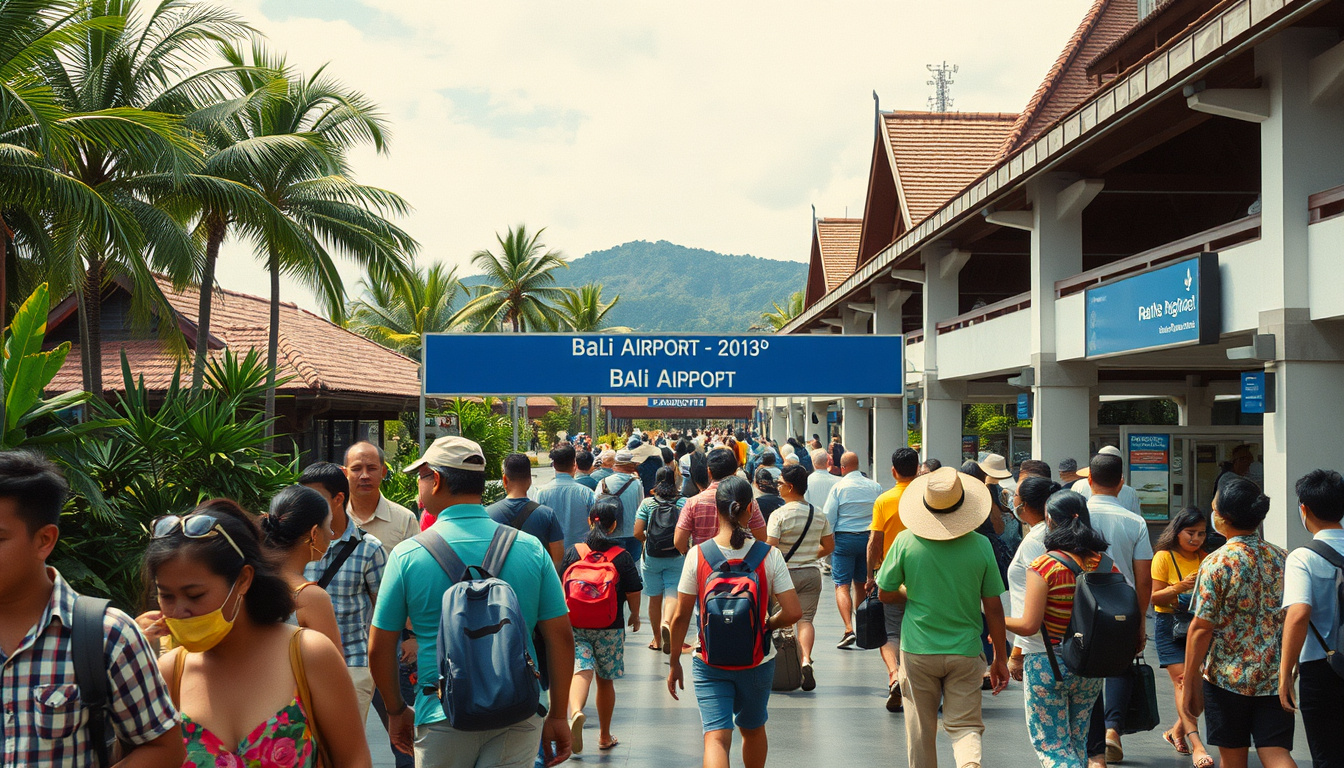






“New Bali” Tourism Initiative Faces Setbacks as Online Interest Fails to Translate into Visitor Arrivals
Jakarta, December 16, 2025 – Indonesia’s ambitious “10 New Balis” tourism program, launched in 2015 to expand the country’s tourist reach beyond the well-trodden paths of Jakarta and Bali, is facing significant challenges. Although online search interest for these emerging destinations has surged internationally, the expected increase in actual tourist arrivals has yet to materialize, according to a recent report by the Indonesian Tourism Ministry.
The program aims to replicate Bali’s tourism success across ten priority destinations, including Central Java’s Borobudur Temple, West Nusa Tenggara’s Mandalika, Labuan Bajo in East Nusa Tenggara, and Lake Toba in North Sumatra. These sites were selected to diversify Indonesia’s tourism portfolio and stimulate economic growth in various regions.
Low Conversion from Online Searches to Physical Visits
The Tourism Ministry’s report, published on December 2, highlights a concerning “low search-to-traffic ratio.” While countries such as Japan, India, China, Russia, the United States, and Germany have shown considerable online interest in the new destinations, actual visitor numbers remain disproportionately low. This discrepancy suggests that high search volumes have not translated into corresponding increases in tourist arrivals.
A significant factor contributing to this gap is the concentration of international flights primarily into Jakarta and Bali. Data from travel technology firm Amadeus indicates that as of October 2025, these two hubs accounted for 81 percent of international arrivals, whereas the ten designated priority destinations collectively received only 3.75 percent of direct international traffic. Consequently, tourists visiting the new destinations often rely on transiting through Jakarta or Bali.
Infrastructure and Connectivity Challenges
The report attributes part of the connectivity issue to operational limitations faced by airlines. Domestic carriers tend to focus on routes with high passenger demand, while foreign airlines encounter restrictions due to the cabotage principle, which limits their ability to operate domestic flights within Indonesia. Limited fleets and high operating costs further discourage the establishment of direct international connections to lesser-known tourist areas.
Moreover, the ministry describes a “chicken and egg” dilemma: airlines and investors hesitate to commit resources without proven demand, yet demand remains underdeveloped due to inadequate access and infrastructure.
Calls for Enhanced Promotion and Strategic Planning
Experts, however, argue that connectivity is not the sole or principal obstacle. Alvin Lie, chairman of the Association of Indonesian Aviation Service Users (Apjapi) and an aviation expert, contends that the critical issue lies in insufficient marketing and promotion of these destinations, both domestically and internationally.
“It is not minimal connectivity holding back tourism growth,” Lie stated in an interview. “Rather, the Tourism Ministry and local governments have not effectively showcased their local potential abroad.” He pointed out that even major Indonesian airports like Bali’s Ngurah Rai and Jakarta’s Soekarno-Hatta airports still see predominantly Indonesian travelers, with outbound trips focused on Singapore and Kuala Lumpur. According to Apjapi reports, inbound foreign passengers account for a majority in only five of the country’s international airports.
Similarly, Azril Azhari, chairman of the Indonesian Tourism Expert Association (ICPI), emphasized the need for a comprehensive evaluation of the initiative. He criticized the planning and execution as inadequate, noting contradictions with United Nations guidelines favoring community-based tourism. Azhari advocated for a shift away from mass tourism towards niche market segments that focus on wellness, gastronomy, and other specialized interests. He argued that measuring success by the length of tourist stays rather than sheer visitor numbers would better reflect sustainable tourism development.
Economic Implications and Future Outlook
Haryo Limanseto, spokesperson for Indonesia’s Coordinating Economy Minister’s Office, highlighted tourism as a key sector in achieving national economic growth targets of 8 percent by 2029 and accelerating regional economic recovery. The government acknowledges the need to optimize efforts to encourage domestic tourists to explore Indonesia’s diverse destinations. A reported decline in average tourist stays—currently around two days, trailing behind regional neighbors Malaysia and Thailand—underscores the urgency to foster deeper engagement with travelers.
With regional authorities and central government urged to strengthen cooperation and marketing initiatives, the “10 New Balis” program faces a critical juncture. Enhanced infrastructure, more balanced flight connectivity, and targeted promotional campaigns may be required to translate the growing online enthusiasm for Indonesia’s emerging destinations into tangible visitor numbers and sustainable economic benefits.



Add a comment