





Bali’s Tourism Paradise Struggles Under Increasing Visitor Pressure
Bali, Indonesia — The once-idyllic island of Bali welcomed more than 6.3 million international tourists in 2024, marking a record high that should have been cause for celebration. However, the surge in visitors has instead highlighted significant challenges that threaten to undermine Bali’s reputation as a tropical tourism paradise.
Visible Strains Across the Island
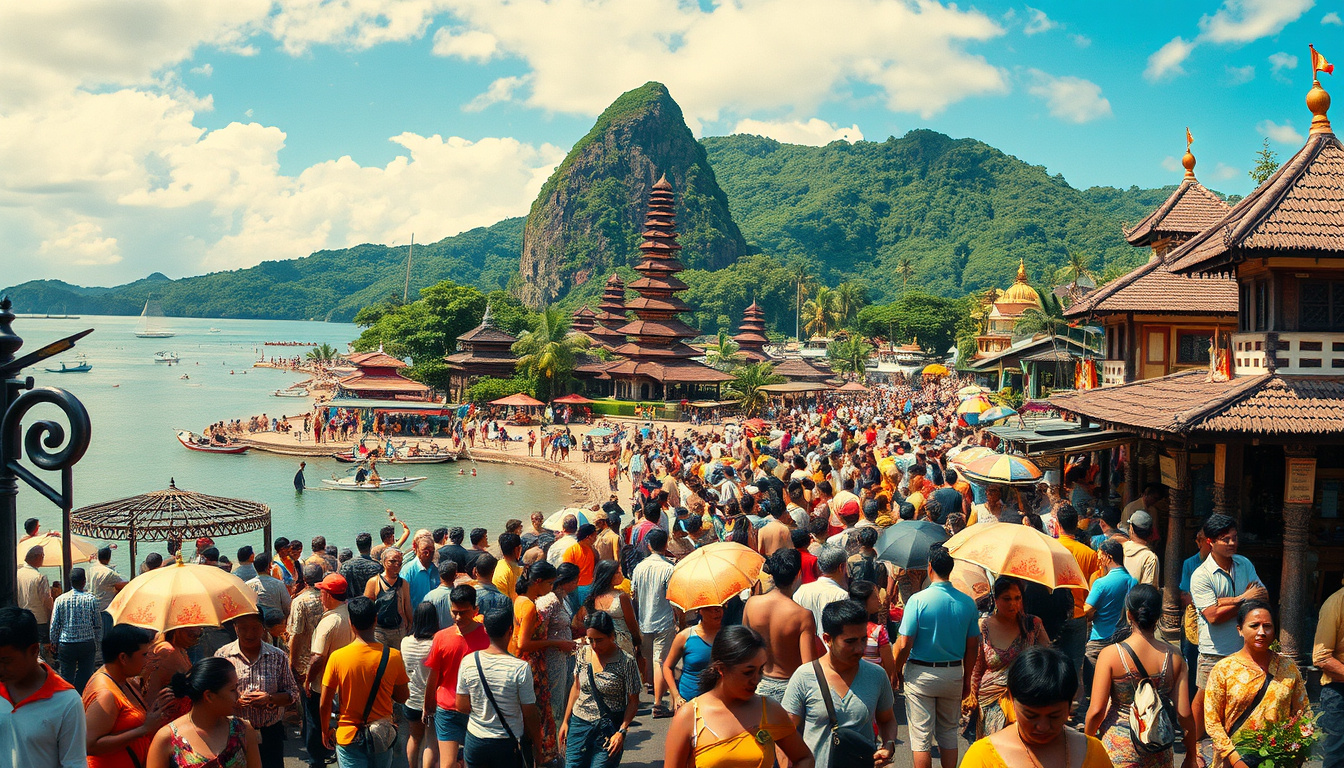
Travelers arriving in Denpasar quickly encounter signs of the island’s tourism struggles. Long traffic jams between the airport and popular destinations like Ubud have become commonplace. Meanwhile, Bali’s famed beaches are increasingly cluttered with plastic waste and closely packed sunbeds, diminishing their natural appeal. The island’s iconic rice terraces suffer ecological stress from crowds of tourists eager to capture perfect Instagram shots. Even Bali’s sacred temples, traditionally places of reverence, have become overrun with selfie sticks and tourists, diluting their spiritual atmosphere.
Most visitors concentrate within a stretched “tourist zone” spanning from Canggu through Seminyak, Kuta, and Ubud to the eastern cliffs. This area now ranks among Southeast Asia’s most densely populated tourist hubs, signaling an imbalance in tourism distribution.
A Growing Backlash and Changing Preferences
The swelling number of tourists has prompted a backlash. Some European and Australian tour operators have reported declining bookings for the 2025–2026 period compared to the peak in 2024. Travelers who once dreamed solely of Bali’s shores now express interest in alternative, less crowded destinations such as Lombok, Sumba, Sri Lanka, and the Philippines.
Experts attribute the problem not to “overtourism” per se but to insufficient management. Bali’s promotional campaigns continue to aggressively pursue visitor growth without adequately considering the island’s carrying capacity. Administrative challenges, such as frequent leadership turnover in the provincial tourism office and inconsistent regulation enforcement, have exacerbated the situation.
Unregulated Growth and Tax Collection Issues
Illegal constructions, including unauthorized villas lacking proper permits and wastewater systems, proliferate rapidly. Unlicensed businesses like uncertified yoga centers and clandestine bars operate openly, complicating efforts to maintain order.
In February 2024, a tourist tax of 150,000 rupiah (approximately $10) was introduced to finance conservation and cultural initiatives. Yet, Bali’s tourism chief, Tjokorda Bagus Pemayun, conceded that only about 35% of international tourists paid this levy in 2024. Inconsistent collection practices and technical issues with online payment portals have undermined the tax’s effectiveness.
Long-Term Foreign Residents Stir Tensions
The growing community of long-term foreign residents—digital nomads, yoga instructors, villa owners, and retirees—has become a focal point of local tensions. While many of these expatriates contribute positively to Bali’s economy, some have drawn criticism for neglecting visa rules, competing unfairly with local businesses, and transforming traditionally peaceful areas into party zones. Media reports highlighting unauthorized foreign-operated retreats and bars have fueled concerns that Bali’s culture and resources are being exploited without sufficient respect for local customs.
Potential Consequences of Inaction
Tourism experts warn that Bali risks entering a downward spiral. When tourist satisfaction declines due to overcrowding and degraded experiences, fewer travelers return or provide positive recommendations. This often forces businesses to compete on price, attracting more budget-conscious tourists and further stressing the destination’s resources.
Already, hotels in high-demand areas such as Canggu and Ubud report that average daily rates during shoulder seasons are 10–15% lower in real terms than in 2023, despite rising land and operational costs. Some of Bali’s most famous beaches have been featured on lists of “most disappointing” tourist sites. In response, sacred temples like Tanah Lot and Besakih have introduced strict visitor limits and timed entry policies, albeit after residents have witnessed significant changes to their island’s character.
Pathways to Sustainable Tourism Management
There are examples worldwide demonstrating that determined political action and clear regulations can successfully manage tourism volumes while preserving environmental and cultural integrity. Countries like Bhutan, which practices high-value, low-volume tourism, Palau with its rigorous environmental standards, and post-pandemic Iceland illustrate viable alternatives.
Bali’s path forward includes several recommended measures:
- Enforce strict visitor capacity limits in southern Bali and incentivize tourism development in less crowded northern and eastern regions.
- Implement a mandatory, universally collected tourist tax at points of entry such as airports.
- Crack down on unauthorized building projects and visa violations with high-profile enforcement actions.
- Develop comprehensive plans to disperse tourists more evenly across the island by providing subsidies and infrastructure improvements outside the traditional hotspots.
- Restore local village (banjar) authority to veto large construction developments, reinforcing community control over growth.
Without decisive reforms, Bali risks compromising the very qualities that have made it a beloved destination. The island’s breathtaking landscapes, warm local communities, and unique cultural heritage are treasures that cannot sustain unlimited tourism without careful stewardship.
The time to act is now if Bali hopes to secure its future as a thriving and sustainable tourism paradise.



Add a comment